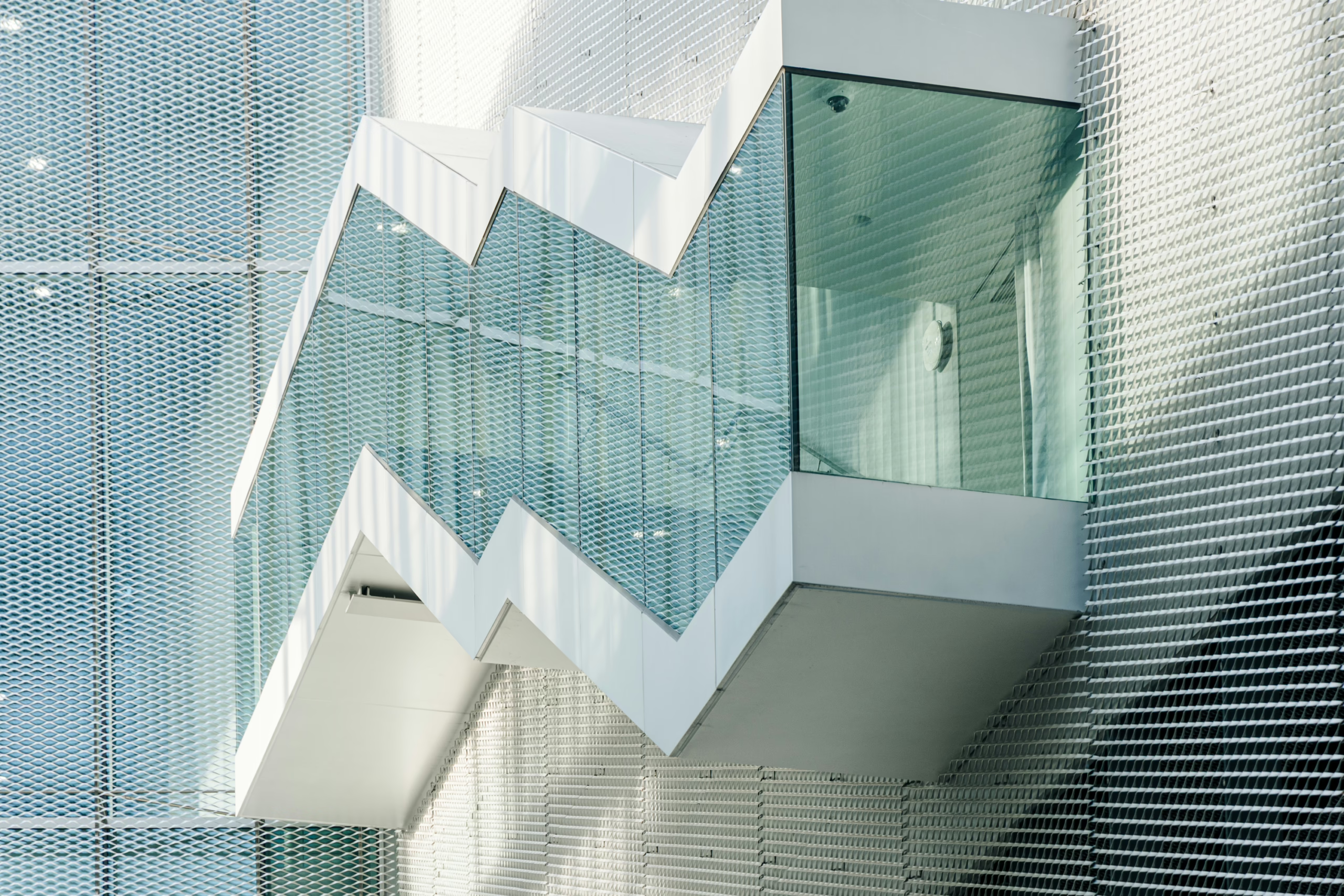
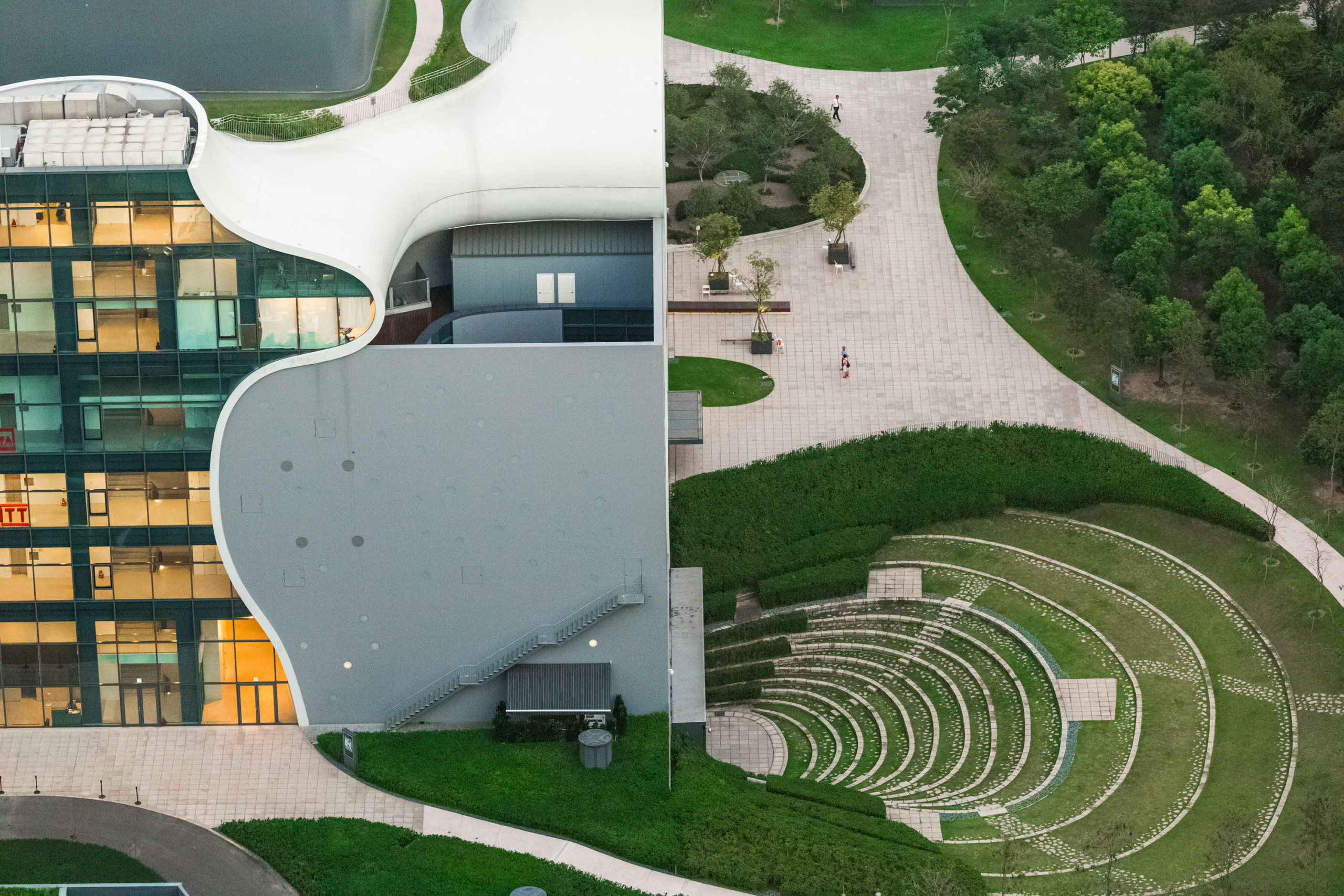
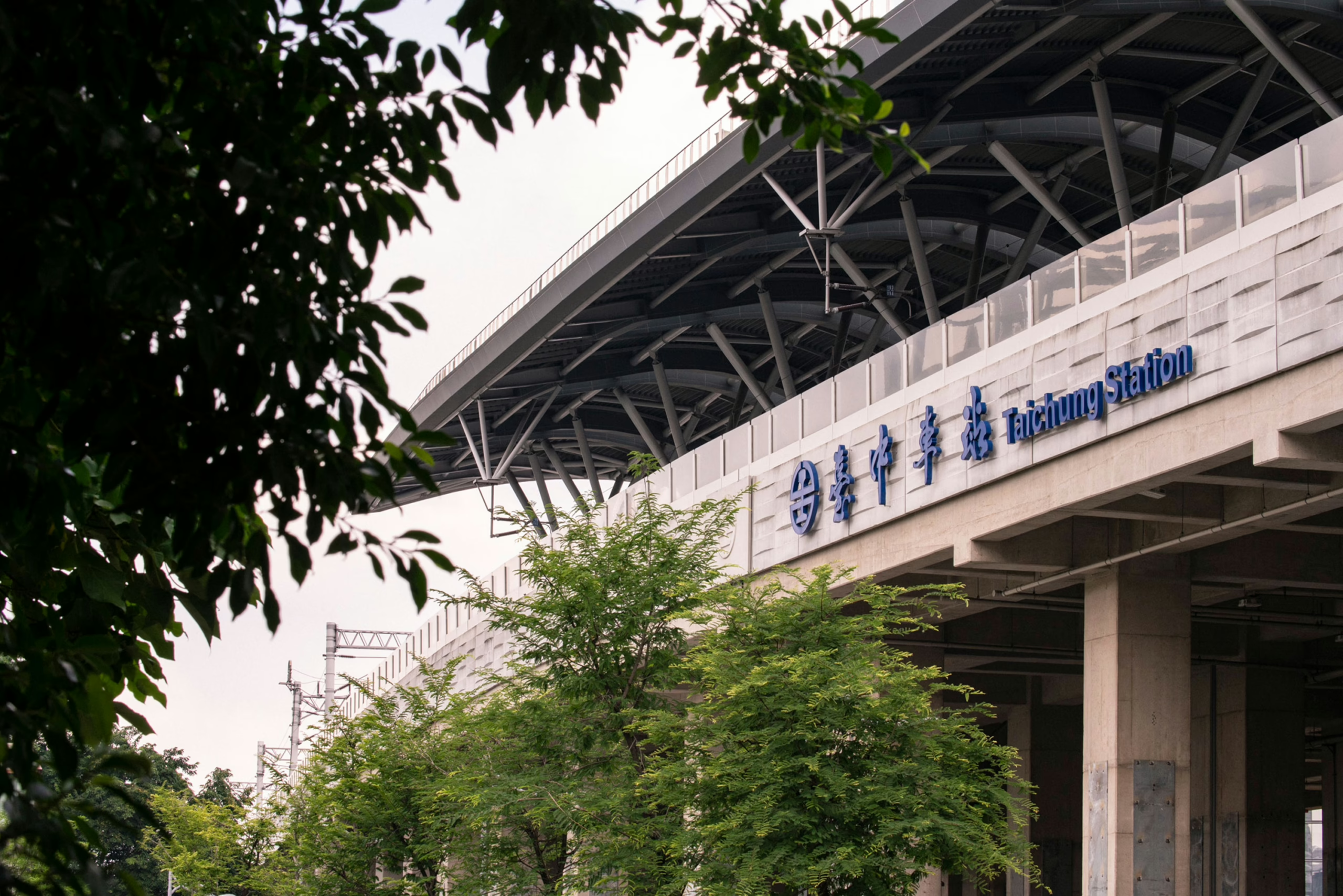
Continuing the urban disruption sparked by “Design Hub” in 2024, in 2025, we envision Taichung as a city that can be both folded and unfolded. Between streets, buildings, and the traces of daily life, there exist a multitude of intersecting folds within which human relationships quietly unfold.
Urban change often begins on an everyday scale.
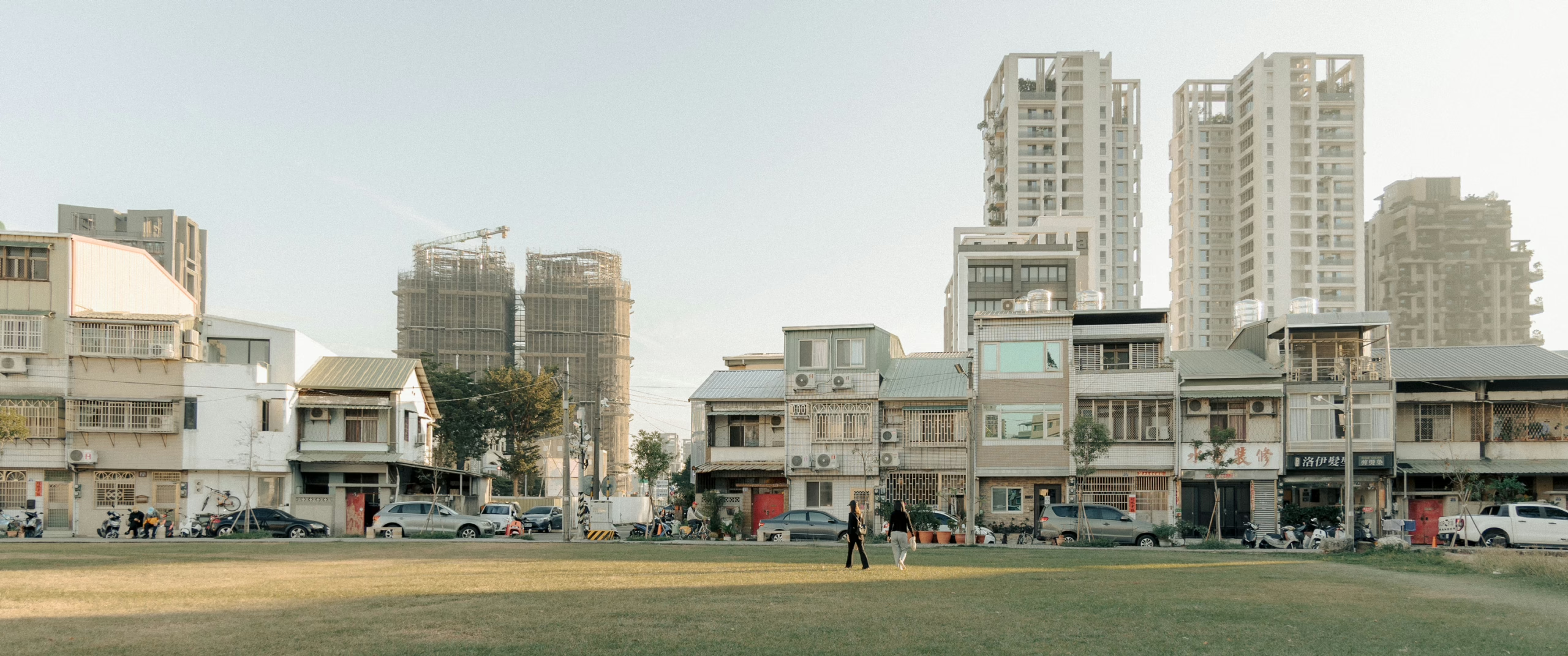
In the “horizontal expansion” of times past, life was a low-density, slow-paced affair. Corner grocery stores and arcade food stalls served as information exchange centers. On the way home, one exchanged a few friendly greetings with neighbors. The sounds of children running in the alleyways overlapped with adults chatting, forming shared memories of home and belonging.
As cities have evolved “vertically,” buildings have grown tall, and increases in population density have followed. The path home is now more direct: from the main roads, we arrive in our parking garage, before taking an elevator to our door. Our paths have been shortened, our neighborly interactions avoided. Unexpected encounters gradually fade in the name of efficiency.
This is neither good nor bad, simply the trajectory of urban development. Within this evolution, however, we have also come to realize that, amid these layers, the distance that allows us to draw closer is truly a precious thing.
城市裡的關係從來不是恆定的, 更像是一張被無數人反覆翻摺的地圖。
Relationships in a city are never constant. Instead, like a map, they are repeatedly folded and unfolded.
When shared moments are folded up, we can use design to gently unfold them. Thus the concept of Co-Living, Co-Designed was born. This is not an architectural term, but a new way of “reading” a city.
Through walking, observing, listening and reading, we unfold those tightly furled layers.
Each person is a “design hub” in his or her own right. Walking their own path, they respond to others, sharing in the moments of life.
In this space between folding and unfolding, lies the possibility of encountering one another again.
In this imagined city of folds, we speak of population density, the scale of living units, and the probability of encounters. In the real city that is Taichung, an urban outline can be found hidden within facts and figures.
The extent of green spaces, the amount of sunlight, the radius of movement, and the density of culture– these seemingly objective figures shape the blueprint of what we call a livable city.
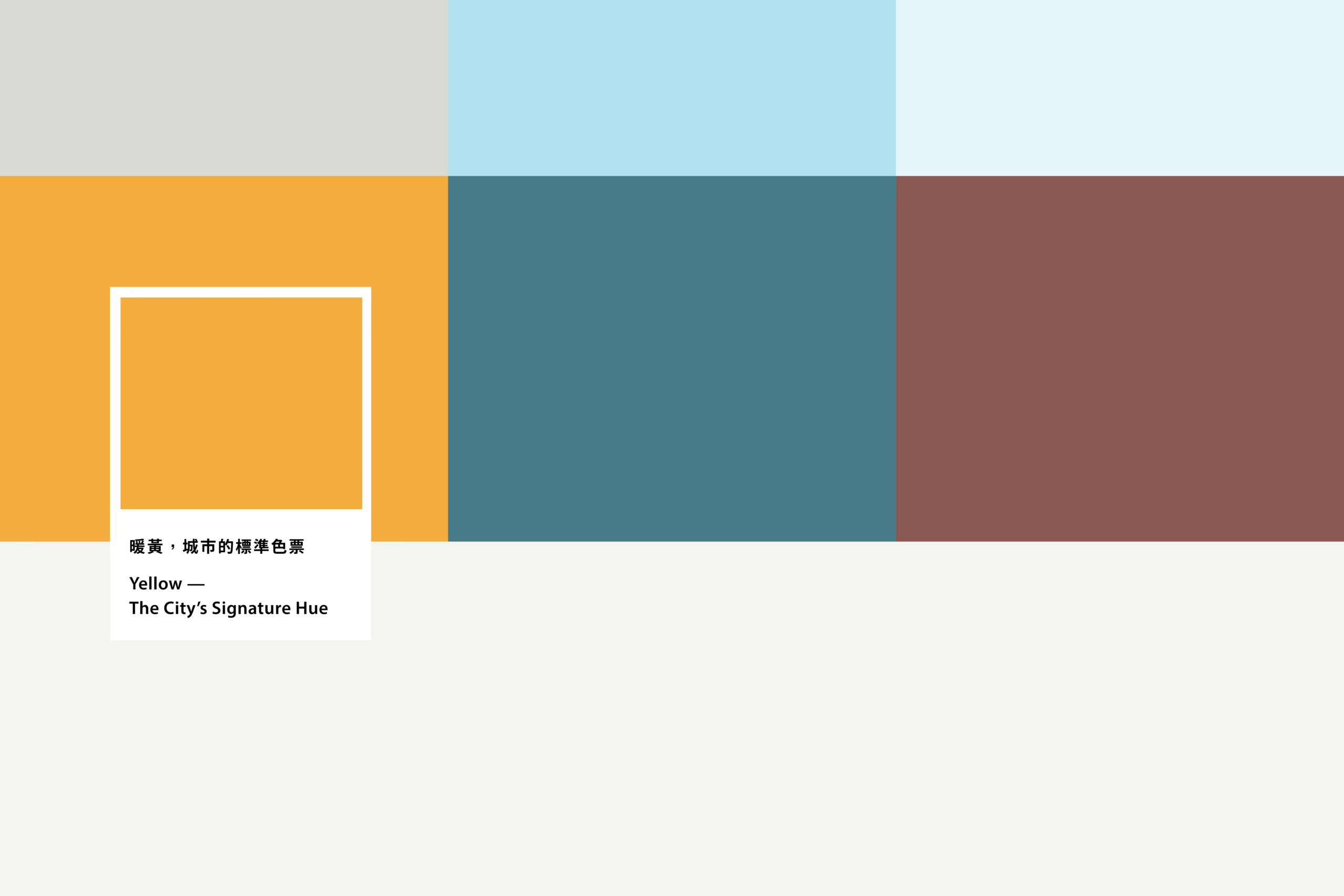
Springtime reveals the golden trumpet trees in all their flamboyant glory. Early summer features the golden rain of the golden shower tree. The warm days of autumn are filled with golden rain trees, shifting from golden blossoms to orange fruits, while sidewalks are blanketed with a yellow carpet of senna flowers. The city is a fine arts museum that never closes.
小時日照(每年)
0
陽光,是最奢侈的標配。
入住這座城市,您將成為陽光的寵兒,迎接每日 8.3 小時的金黃時光。
23°C,年平均溫度,都會行動的舒適定律。
四季的恆溫體感,讓戶外運動成為自然的習慣。
23°C 的生活,比您想像更自由。
With 3,043 hours of sunshine annually, Taichung’s residents are truly rich in sunlight. Living in Taichung, one becomes a darling of the sun, welcoming an average of 8.3 hours of sunlight a day.
An average temperature of 23°C is perfect for all forms of urban activities. The constant temperature throughout the year makes engaging in outdoor activities an easy habit to form.
Life at 23°C is more free than you could imagine.
地段,國家級樞紐
Location — A National Gateway
城市綠帶近 300 萬坪, 相當於 1,300 座足球場的延伸。 步行5分鐘,便能遇見樹影與風。
全城擁抱
分鐘
0
抵達學區、醫療、商圈
分鐘
0
抵達高速公路
分鐘
0
登山望海
平均通勤距離僅 7 公里, 「說走就走」是內建的生活節奏。
10 minutes to reach schools, hospitals, and shopping districts; 15 minutes to reach major highways; 30 minutes to mountain trails; With an average commuting distance of just seven kilometers,“go whenever you want” is a built-in rhythm of daily life in Taichung.
三環路網與三鐵共構串起城市: 晨間登坡、傍晚看浪, 生活不是庸庸碌碌, 而是自由選擇節奏的權利。
The city is connected by a three-ring road network, as well as three rail systems. Early morning hikes, sunsets at the beach–life here is anything but mundane. It’s about the freedom to choose your own pace.
Taichung is home to 318 schools, from kindergartens to research institutes, and 17 colleges and universities. It is fertile ground for knowledge, nurturing the wisdom of future generations.
Opera houses, art galleries, and libraries form cultural landmarks of international caliber, making culture a natural part of daily life here.
Taichung boasts 47 libraries and 5 cultural centers, with over 200 reading events held annually and more than 20 million books borrowed each year. From book bags for newborns to 24-hour bookstores, people of all ages can experience the world of books.
城市的尺度逐漸清晰。 因為這些現實的參數, 摺疊市有了可依附的質地。
The scale of the city gradually comes into focus, as these concrete parameters give this folded city a tangible sense of form.